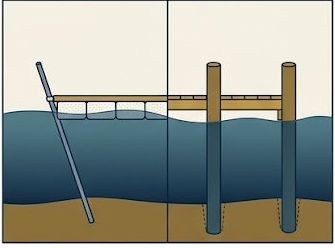
Floating Dock Anchor Pole with T-Handle
If you're installing a floating dock and want to keep it removable for seasonal exemption purposes, a spud-pole style anchor is the standard approach discussed throughout this guide. This 7.75-foot anchor pole anchors the dock to the lakebed without permanent pilings, and lifts out by hand each fall — no excavation, no embedded hardware, no permit complications.
View on Amazon →A common misconception is that small docks automatically require no permits anywhere. The reality is more nuanced: many states do have size-based exemptions, but they come with specific conditions — seasonal removal requirements, width limits, anchoring restrictions, water body type exclusions, and local overrides that can eliminate the exemption entirely.
This guide compiles the key exemption thresholds for major dock-permitting states. Even where a state exemption exists, county and township requirements apply independently — an exempt dock still needs local review in most jurisdictions.
State Exemption Reference Table
| State | Exemption Threshold | Key Conditions | Does NOT Apply When |
|---|---|---|---|
| Florida | 1,000 sq ft total overwater area (500 sq ft in Outstanding Florida Waters) |
Private residential use; no dredging; no seagrass damage; no navigation obstruction | Outstanding Florida Waters; Aquatic Preserves; Monroe County; community docks; tidal areas (Army Corps still applies) |
| Minnesota | 8 ft max width (any section); no permanent embedded pilings | Seasonal removal; no enclosed structure; no navigation hazard; not in posted fish spawning area | Exceeds 8 ft width anywhere; Natural Environment lakes (local rules stricter); LMCD jurisdiction lakes |
| Michigan | 6 ft max width; seasonal removal before Dec 1 | No permanent embedded pilings; no fill; no enclosed structure; inland lakes only | Great Lakes shoreline (no exemption under Part 325); permanent structures; docks exceeding 6 ft width |
| Wisconsin | No specific sq ft threshold; seasonal piers generally exempt | Seasonal removal; no dredging; no significant vegetation removal; compliant with local ordinances | Navigable rivers with specific regulations; significant environmental impact; local county ordinances may be stricter |
| Indiana | Seasonal structures generally exempt (DNR) | Seasonal and removable; no permanent embedded structures; no filling | Lake Michigan shoreline; structures involving fill; connected to regulated wetlands |
| Ohio | Seasonal docks on inland lakes generally exempt from ODNR permit | Non-permanent; no fill; not in Lake Erie or navigable river (Army Corps jurisdiction) | Lake Erie (Army Corps jurisdiction); dredging; wetland impacts |
| Tennessee (TVA) | No exemption on TVA reservoirs | Section 26a permit required for all docks on TVA waters | N/A — exemption does not exist for TVA-managed waters |
| Georgia | No size-based exemption for coastal docks | Revocable License required for all coastal Georgia docks | N/A (coastal) — inland reservoirs have separate Army Corps or utility rules |
The Three Things an Exemption Doesn't Cover
Even when your dock clearly qualifies for a state-level exemption, three things still apply:
1. County and Township Permits
State exemptions only exempt you from the state agency's permit requirement. Your county or township building department operates under separate authority and typically requires its own permit for dock construction — including docks that are state-exempt. Many Michigan townships require a permit for all dock construction regardless of EGLE's 6-foot seasonal exemption. Most Florida counties require a building permit for all docks regardless of DEP's Chapter 403.813 exemption. Always call your county building department as a separate step.
2. Army Corps of Engineers Jurisdiction
A state exemption has absolutely no effect on Army Corps jurisdiction. If your dock is on a federally navigable waterway or involves fill near wetlands, Army Corps authorization is required regardless of state exemption status. State and federal permits are legally independent. See the Army Corps guide for details.
3. Homeowners Association Rules
If your waterfront property is subject to HOA covenants or a lake association agreement, those rules apply independently of government permits. An HOA can prohibit dock construction that government agencies would permit. Review your HOA documents before starting any permit process.
Documenting Your Exemption
When a state exemption applies, there is typically no certificate or formal document issued. This creates a practical problem: if someone questions your dock's permit status — during a property sale, a conservation officer visit, or a neighbor complaint — you need to be able to demonstrate eligibility.
Recommended documentation to keep on file for exempt docks:
- A written note (dated and signed) confirming the dock's dimensions and confirming each exemption criterion is met
- Photographs showing the dock dimensions and overall installation
- A copy of the state rule or statute under which the exemption applies
- Documentation of seasonal removal (photos, log of removal/installation dates)
- Any correspondence with your state agency confirming exemption status (even informal email confirmation is valuable)
This documentation packet is especially important when selling the property. Buyers and their attorneys will often ask for permit documentation for an existing dock — being able to produce a clear exemption file rather than "we never needed a permit" is far more reassuring and prevents deal complications.
Free Download: Dock Permit Application Prep Checklist
Includes an exemption documentation section to help you build a proper record of your dock's compliance — essential for property sales.
Download Free PDF →